Home
/ What Is Environmental Engineering - Environmental Engineering A Boon For A Better Future : Their work might focus on topics like waste disposal, erosion, and.
What Is Environmental Engineering - Environmental Engineering A Boon For A Better Future : Their work might focus on topics like waste disposal, erosion, and.
What Is Environmental Engineering - Environmental Engineering A Boon For A Better Future : Their work might focus on topics like waste disposal, erosion, and.. It uses the principles of biology and chemistry to develop solutions to environmental problems. Environmental engineering is a job type that is a professional engineering discipline and takes from broad scientific topics like chemistry, biology, ecology, geology, hydraulics, hydrology, microbiology, and mathematics to create solutions that will protect and also improve the health of living organisms and improve the quality of the environment. In fact, according to the college board, management, scientific and technical consulting services is the industry that is expected to experience the most growth between 2008 and 2018, adding an additional 835,000 positions. Environmental engineering, like many fields of engineering, involves the planning, design, construction and operation of equipment, systems, and structures for the benefit of society. Their work might focus on topics like waste disposal, erosion, and.
Environmental engineering refers to the use of scientific processes to help improve the earth's environment to provide healthier land, water and air for human use and to find ways to scale back on pollution sites. Environmental engineers use knowledge of engineering, soil science, chemistry, and biology to solve problems in the environment. The field is also dedicated to improving environmental conditions through remediation. Environmental engineering, like many fields of engineering, involves the planning, design, construction and operation of equipment, systems, and structures for the benefit of society. Environmental engineers protect the health of people and the planet.
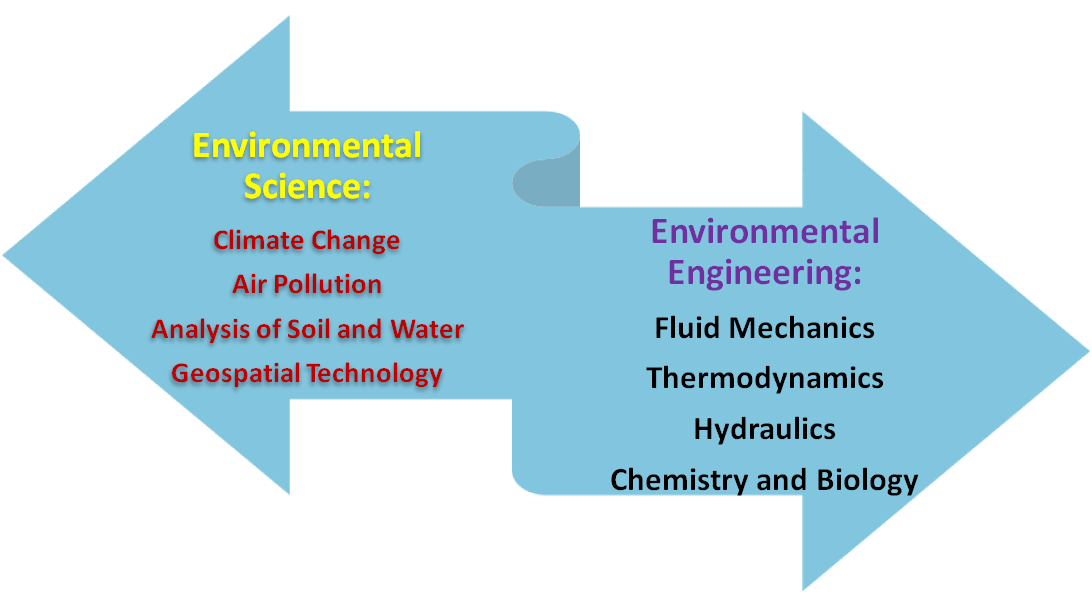
What Is The Difference Between A Degree In Environmental Science And Environmental Engineering from www.degreequery.com Rather than only considering conventional waste emission treatment, we want our students to approach problems from an integrated perspective that considers both environmental and ecological aspects. Environmental engineering is a set of scientific knowledge, techniques, and practices that consider ecological mechanisms applied to the management of resources, the design, and construction of facilities or equipment. Environmental engineering is the branch of civil or chemical engineering in general, it deals with basic amenities of everyday life like sewerage and drainage treatments town and municipal planning water treatment of large plants The field is also dedicated to improving environmental conditions through remediation. From the earliest days of wetland drainage and the need to acquire fresh water, to keep it flowing and keep it clean enough to drink, building cesspits to take away our waste and to stop pollution of vital waterways, we have always. Environmental engineering is the branch of engineering that focuses on protecting the environment by reducing waste and pollution. Read on to find out more about environmental engineers. Sometimes, environmental engineers will work with big companies to reduce their air pollution levels.
They tackle a variety of issues, and their concerns include pollution control, recycling, and public health issues.
Environmental engineering is a field of broad scope that draws on such disciplines as chemistry, ecology, geology, hydraulics, hydrology, microbiology, economics, and mathematics. Environmental engineers use knowledge of engineering, soil science, chemistry, and biology to solve problems in the environment. Environmental engineering is a set of scientific knowledge, techniques, and practices that consider ecological mechanisms applied to the management of resources, the design, and construction of facilities or equipment. Why environmental engineering is vital for our future. It involves the technologies, equipment and processes needed to control and clean up pollution and contamination. Environmental engineering is the branch of engineering that is concerned with protecting people from the effects of adverse environmental effects, such as pollution, as well as improving. Environmental engineering is the branch of civil or chemical engineering in general, it deals with basic amenities of everyday life like sewerage and drainage treatments town and municipal planning water treatment of large plants Environmental engineering is the sister field of civil engineering and involves integrating engineering principles and science to improve natural environment and to protect it while providing potable water, clean air and sustainable life for humans and other organisms. It is also concerned with improving environmental quality. An environmental engineer is someone who uses the principles of engineering, soil science, biology, and chemistry to develop solutions to environmental problems. It deals with the design of technologies and processes that control pollution releases and clean up existing contamination. Environmental engineering is a branch of engineering that concerns itself with protecting people from the effects of negative environmental effects, including pollution. Read on to find out more about environmental engineers.
Environmental engineering is a branch of engineering that concerns itself with protecting people from the effects of negative environmental effects, including pollution. Environmental engineers working at the interface between biology and engineering typically have backgrounds in the emerging discipline of environmental biotechnology where molecular biology, mathematical modeling, and bioprocess engineering are integrated to develop biological solutions to environmental engineering challenges. The work of an environmental engineer includes improving the quality of recycling, waste disposal, public health and. Environmental engineering is used to maintain the quality of water, air and land. It uses the principles of biology and chemistry to develop solutions to environmental problems.
Environmental Engineering Dictionary Jetzig Spellman Frank R Ebay from i.ebayimg.com Environmental engineering is a field of broad scope that draws on such disciplines as chemistry, ecology, geology, hydraulics, hydrology, microbiology, economics, and mathematics. Environmental engineering is the branch of engineering that is concerned with protecting people from the effects of adverse environmental effects, such as pollution, as well as improving. Read on to find out more about environmental engineers. Environmental engineers work to prevent, control or remediate any hazards to the environment using their engineering expertise. In the case of environmental engineering, the equipment, systems, and structures are for the protection and enhancement of the environment. The technical skills environmental engineers learn are used to develop strategies and technologies to treat and protect the quality of air, water and earth. They tackle a variety of issues, and their concerns include pollution control, recycling, and public health issues. Environmental engineering refers to the use of scientific processes to help improve the earth's environment to provide healthier land, water and air for human use and to find ways to scale back on pollution sites.
Environmental engineers use knowledge of engineering, soil science, chemistry, and biology to solve problems in the environment.
Environmental engineering is a branch of engineering that concerns itself with protecting people from the effects of negative environmental effects, including pollution. An environmental engineer is someone who uses the principles of engineering, soil science, biology, and chemistry to develop solutions to environmental problems. Environmental engineering is the sister field of civil engineering and involves integrating engineering principles and science to improve natural environment and to protect it while providing potable water, clean air and sustainable life for humans and other organisms. They tackle a variety of issues, and their concerns include pollution control, recycling, and public health issues. Ready to take the next step? It deals with the design of technologies and processes that control pollution releases and clean up existing contamination. Environmental engineering is a job type that is a professional engineering discipline and takes from broad scientific topics like chemistry, biology, ecology, geology, hydraulics, hydrology, microbiology, and mathematics to create solutions that will protect and also improve the health of living organisms and improve the quality of the environment. Environmental engineering is the branch of engineering that focuses on protecting the environment by reducing waste and pollution. Why environmental engineering is vital for our future. The environment includes everything created by nature (air, water, flora and fauna). They design tools that help us measure things that are bad for the environment, like car emissions. Environmental engineers work to prevent, control or remediate any hazards to the environment using their engineering expertise. The technical skills environmental engineers learn are used to develop strategies and technologies to treat and protect the quality of air, water and earth.
Environmental engineers deal with the protection of people from the effects of adverse environmental effects such as pollution. They are involved in efforts to improve recycling, waste disposal, public health, and control of water and air pollution. Environmental engineering refers to the use of scientific processes to help improve the earth's environment to provide healthier land, water and air for human use and to find ways to scale back on pollution sites. They design tools that help us measure things that are bad for the environment, like car emissions. Environmental engineering is the branch of engineering that focuses on protecting the environment by reducing waste and pollution.
Environmental Engineer Average Salary In Japan 2021 The Complete Guide from www.salaryexplorer.com Broadly, environmental engineers design systems and solutions at the interface between humans and the environment. Environmental engineering is a field in engineering where professionals focus on combining environmental science methods with engineering principles to develop and implement better infrastructure, technology and industrial operations that reduce the risk of environmental contamination and pollution. In the case of environmental engineering, the equipment, systems, and structures are for the protection and enhancement of the environment. It uses the principles of biology and chemistry to develop solutions to environmental problems. Environmental engineering is the branch of engineering that is concerned with protecting people from the effects of adverse environmental effects, such as pollution, as well as improving. Ready to take the next step? Rather than only considering conventional waste emission treatment, we want our students to approach problems from an integrated perspective that considers both environmental and ecological aspects. It is also concerned with improving environmental quality.
The technical skills environmental engineers learn are used to develop strategies and technologies to treat and protect the quality of air, water and earth.
It uses the principles of biology and chemistry to develop solutions to environmental problems. Humanity has always engineered the environment around us. Environmental engineering is dedicated to the creation of strategies to protect and improve the environment. In fact, according to the college board, management, scientific and technical consulting services is the industry that is expected to experience the most growth between 2008 and 2018, adding an additional 835,000 positions. Environmental engineers protect the health of people and the planet. Environmental engineering, like many fields of engineering, involves the planning, design, construction and operation of equipment, systems, and structures for the benefit of society. Environmental engineering is the branch of engineering that is concerned with protecting people from the effects of adverse environmental effects, such as pollution, as well as improving. In the case of environmental engineering, the equipment, systems, and structures are for the protection and enhancement of the environment. They are involved in efforts to improve recycling, waste disposal, public health, and control of water and air pollution. Environmental engineering is the branch of engineering that focuses on protecting the environment by reducing waste and pollution. Environmental engineers work to prevent, control or remediate any hazards to the environment using their engineering expertise. Environmental engineering is a set of scientific knowledge, techniques, and practices that consider ecological mechanisms applied to the management of resources, the design, and construction of facilities or equipment. Environmental engineering faqs environmental engineers use their knowledge of chemistry and biology to identify and address humanity's negative impact on the natural world.
Environmental engineering is the sister field of civil engineering and involves integrating engineering principles and science to improve natural environment and to protect it while providing potable water, clean air and sustainable life for humans and other organisms what is environment. The environment includes everything created by nature (air, water, flora and fauna).